Fiberglass or gunite: which pool fits a North State backyard
Both make a good pool, but they are built differently and they age differently in a backyard like ours.
October 26, 2026 · 4 min read
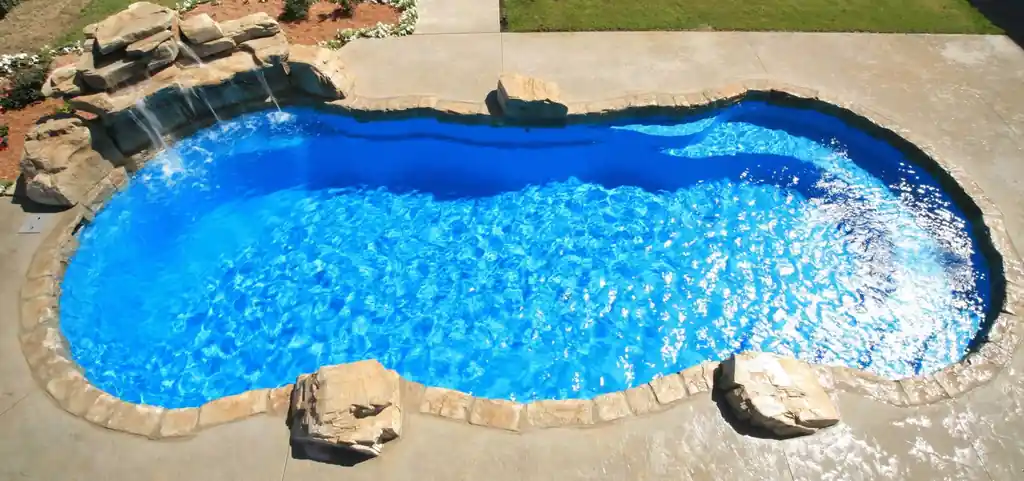
Most people who call about a pool already have a picture in mind: a shape, a size, maybe a rock waterfall like the one in the aerial photo above. What they usually don't have is a clear sense of whether that pool should be a fiberglass shell or a gunite build. Both make a good pool. They are built in very different ways, and the difference shows up in your yard, on your calendar and in your maintenance routine for years afterward.
How each pool actually gets built
A fiberglass pool is molded in a factory as a single shell. It rides to your property on a truck, a crane lifts it over the house or through the side yard, and it gets set into a hole that has been dug and leveled to match. The crew then plumbs it, backfills around it and builds the deck. Because the shell already exists, the long part of the job is the excavation and the base, not the pool itself. We install Leisure Pools and San Juan Pools, and a fiberglass pool can be swimming in as little as two to three weeks.
A gunite pool is built on site. The crew digs, bends a steel rebar cage into the shape of the pool and sprays concrete over it. That shell has to cure, and then it gets tile, coping and an interior finish, most often plaster. Each step waits on the one before it, so the project runs noticeably longer and your yard stays torn up for longer with it.
Shape and size
Gunite can be any shape you can draw. If you want a long lap lane that bends around an oak, a very deep end, or an edge with an unusual geometry, a sprayed concrete shell can follow the drawing. Fiberglass comes from a catalog of molds. That sounds limiting until you open the catalog: San Juan alone lists 66 models, and Leisure Pools has its own range on top of that.
The real limit on fiberglass is transport and access. The shell has to fit on a truck and get lifted into your yard, so a narrow gate, overhead power lines or a steep slope can change the plan. That route is worth walking before you fall in love with a particular model.
The surface you will live with
Fiberglass has a smooth gelcoat surface that is not porous, so algae has a harder time getting a grip and the walls are easy on bare feet. Plaster is rougher and wears slowly. It needs resurfacing at some point, and it asks for more attention to water balance in the first weeks after it goes in.
The Composite Armour line from Leisure Pools uses vinyl ester resin and carries a Lifetime Structural Warranty and a Lifetime Structural Osmosis Warranty from the manufacturer. Whatever shell you choose and whoever you buy it from, ask to read the actual warranty document before you sign. What it covers and what it leaves out matters more than the headline.
What the North State does to a pool
Around Redding the summers are long and dry, the winters bring real rain, and some years bring a hard freeze. A pool sits in all of that. Water evaporates fast in July heat, so you top it off often and keep an eye on the chemistry. Winter rain saturates the ground around the shell. Soil also moves, swelling when it is wet and shrinking when it dries, which is why the base and the backfill matter so much.
A fiberglass shell flexes a little with its surroundings. A concrete shell depends on its engineering and on the quality of the steel and the spray to stay in one piece. Either one does well when it is built well, and either one has trouble when the dirt work is rushed. A pool is only as good as what it sits on.
Where gunite still makes sense
We specialize in inground fiberglass, so weigh our opinion with that in mind. If your heart is set on a shape no mold offers, a very large footprint, or a design that has to match an existing structure, a gunite builder may be the better call. A good builder of either kind will tell you the same thing about the other kind when your yard calls for it. The test is the yard in front of you, not the brochure.
Questions to put to any pool builder
- How does the shell or structure get into my yard, and what has to be moved or removed for that to happen?
- What is the base under the pool made of, and how is the backfill done?
- Who is on site day to day, and who do I call when something looks wrong?
- What do the written warranties cover, and can I read them before I sign?
- Who builds the deck, the fence and the landscaping around the pool?
That last question matters more than people expect, because a pool is rarely just a pool. At Palo Cedro Pool & Spa the same crew handles the pool, the deck, the concrete and the landscaping, and Greg is on site daily. If you want to see how either kind of pool would fit your lot, call (530) 547-4051 and set up a free consultation.
Palo Cedro Pool & Spa, (530) 547-4051
Call (530) 547-4051More articles
Plan the pool, the deck and the landscaping as one project
The pool is only one piece of the yard, and the order you build things in decides how well they fit together.
Choosing deck materials for Northern California weather
A deck lives through a July baking and a January soaking, and the material you pick decides how it handles both.